
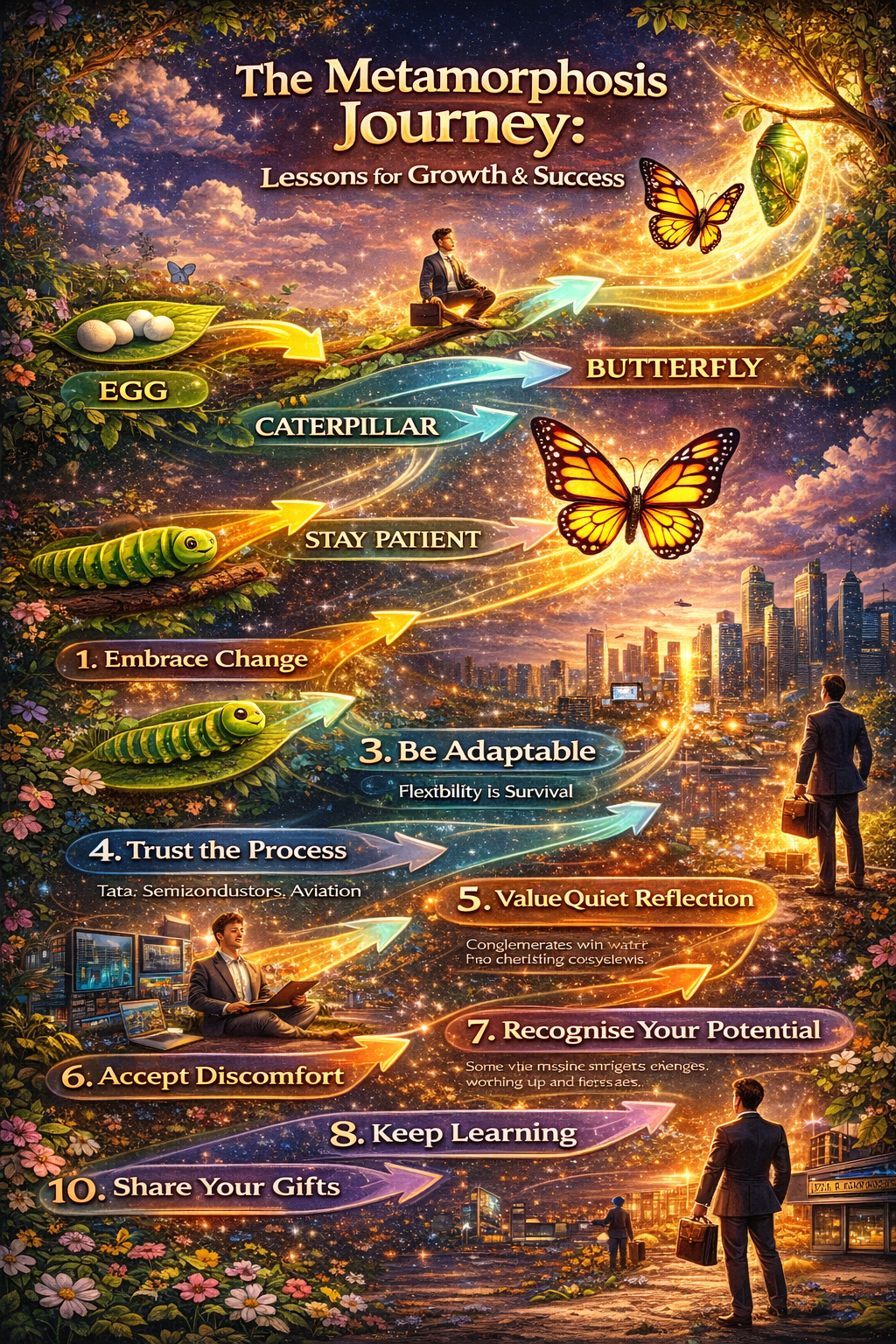
Metamorphosis is a process of profound physical changes that animals undergo as they develop into adults. This process is crucial for insect development, allowing them to crawl, change, and adapt to their environment. The butterfly, like many insects, undergoes a complete metamorphosis, consisting of four distinct stages:
- Egg:This is the initial stage of the butterfly’s life cycle.
- Larva (Caterpillar):
The larva’s primary role is to eat and grow, accumulating the energy reserves necessary for the subsequent stages of development. Its chewing mouthparts are specifically adapted for consuming leaves. - Pupa (Chrysalis):
This is a transformative stage where the caterpillar undergoes a complete reorganisation of its body tissues. The pupa stage is typically immobile and provides protection for the developing insect within. Inside the chrysalis, the caterpillar’s body breaks down and reforms into the adult butterfly. - Adult (Butterfly):
This is the final stage of metamorphosis, where the butterfly emerges with wings and nectar-sipping mouthparts. The adult butterfly is capable of reproduction, ensuring the continuation of the species. Its primary focus is on pollination and reproduction.
This remarkable transformation allows butterflies to exploit different food sources and habitats throughout their life cycle. The caterpillar’s voracious feeding prepares it for the dramatic changes of the pupa stage. The immobile pupa protects the transforming insect. Finally, the adult butterfly emerges, perfectly equipped for its role in the ecosystem.
This intricate process highlights the adaptability and resilience of insects in the natural world. The adult stage also facilitates the insect’s ability to develop, crawl, and change. Insect metamorphosis involves significant changes, enabling adaptation. Caterpillars eat to fuel growth for chrysalis transformation. Inside, tissues reorganise, leading to winged adults. Adult butterflies, with wings and nectar-sipping mouthparts, focus on reproduction. This metamorphosis showcases nature’s design.
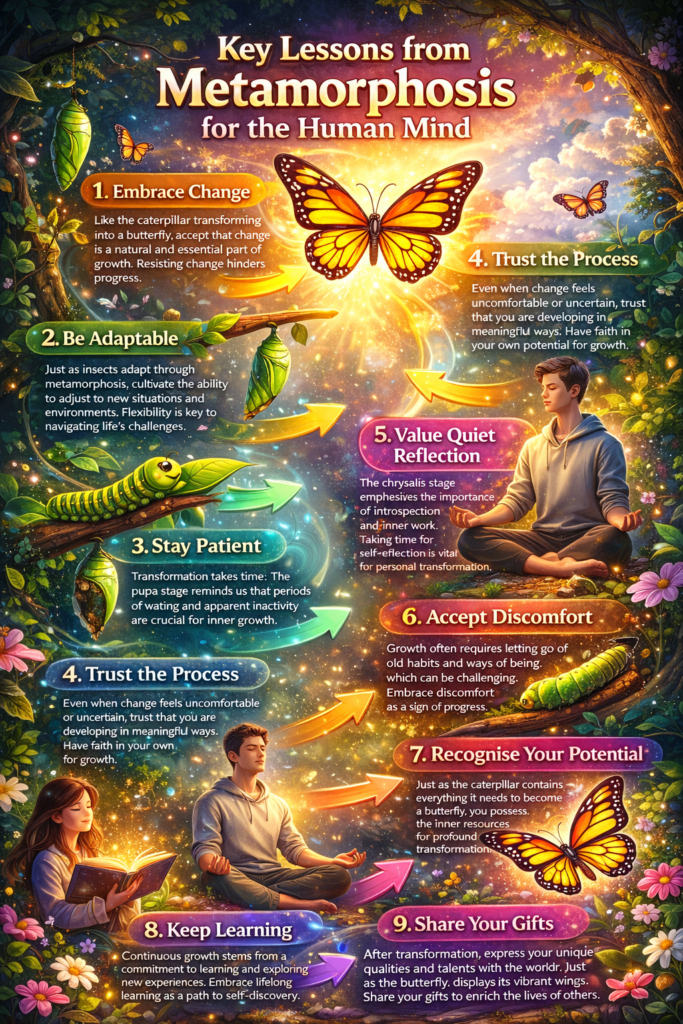
Key Lessons from Metamorphosis for the Human Mind
Metamorphosis offers valuable insights into personal growth and transformation. Consider these key lessons:
- Embrace Change:
Like the caterpillar transforming into a butterfly, accept that change is a natural and essential part of growth. Resisting change hinders progress. - Be Adaptable:
Just as insects adapt through metamorphosis, cultivate the ability to adjust to new situations and environments. Flexibility is key to navigating life’s challenges. - Stay Patient:
Transformation takes time. The pupa stage reminds us that periods of waiting and apparent inactivity are crucial for inner growth. - Trust the Process:
Even when change feels uncomfortable or uncertain, trust that you are developing in meaningful ways. Have faith in your own potential for growth. - Value Quiet Reflection:
The chrysalis stage emphasises the importance of introspection and inner work. Taking time for self-reflection is vital for personal transformation. - Accept Discomfort:
Growth often requires letting go of old habits and ways of being, which can be challenging. Embrace discomfort as a sign of progress. - Recognise Your Potential:
Just as the caterpillar contains everything it needs to become a butterfly, you possess the inner resources for profound transformation. Believe in your own capabilities. - Keep Learning:
Continuous growth stems from a commitment to learning and exploring new experiences. Embrace lifelong learning as a path to self-discovery. - Share Your Gifts:
After transformation, express your unique qualities and talents with the world, just as the butterfly displays its vibrant wings. Share your gifts to enrich the lives of others. - Remember Nothing is Permanent:
Life is a continuous cycle of change and transformation. Embrace the impermanence of things and appreciate the beauty of each stage.
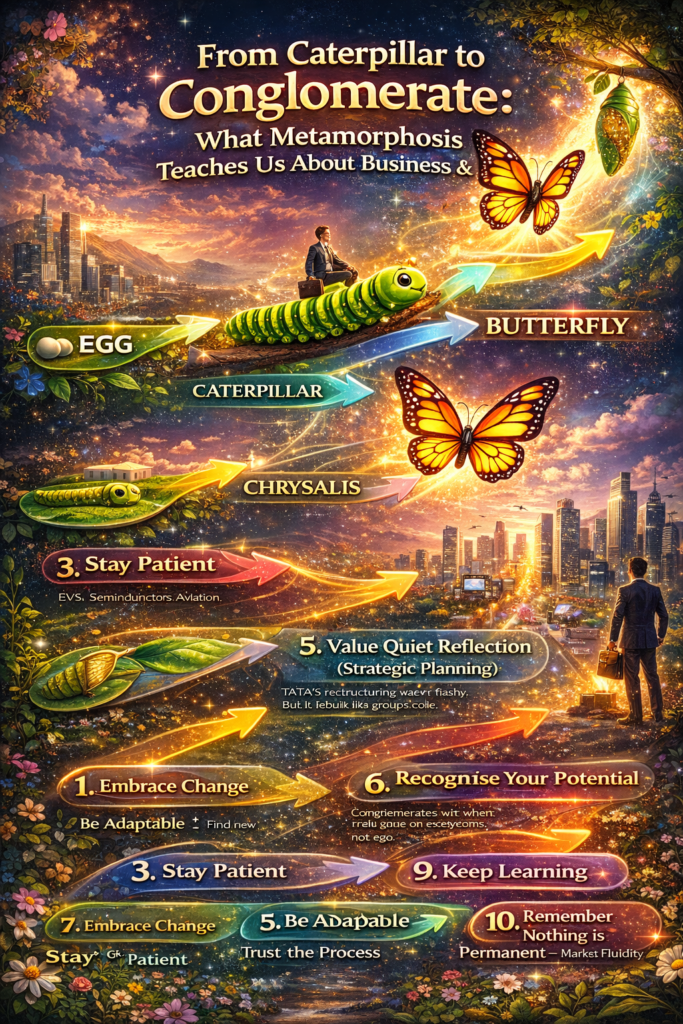
How Metamorphosis Concept to Be Applied to Business
- Embrace Change (Innovate or Perish):
Like the caterpillar’s transformation, businesses must adapt to market shifts. Blockbuster’s failure to embrace streaming, unlike Netflix, exemplifies this. - Be Adaptable (Flexibility is Key):
Insects adapt to survive. Businesses must adjust strategies. Think of restaurants pivoting to delivery services during the pandemic. - Stay Patient (Long-Term Vision):
Transformations take time. Amazon’s initial losses before becoming profitable highlight the importance of patience. - Trust the Process (Data-Driven Decisions):
Caterpillars trust their instincts. Businesses should trust data analysis and market research to guide decisions. - Value Quiet Reflection (Strategic Planning):
The chrysalis stage mirrors strategic planning. Companies like Google allocate time for innovation and brainstorming. - Accept Discomfort (Risk-Taking):
Growth involves risk. Tesla’s foray into electric vehicles, despite initial scepticism, showcases embracing discomfort. - Recognise Your Potential (Market Leadership):
Caterpillars have the potential to become butterflies. Businesses should identify their strengths and strive for market leadership. - Keep Learning (Continuous Improvement):
Lifelong learning is crucial. Companies like Microsoft constantly update their software, reflecting continuous improvement. - Share Your Gifts (Value Proposition):
Butterflies share their beauty. Businesses should offer unique value propositions to customers. Apple’s user-friendly design is a prime example. - Remember Nothing is Permanent (Market Fluidity):
Markets change. Nokia’s decline in the mobile phone market highlights the impermanence of success. Adaptability is key to long-term survival.